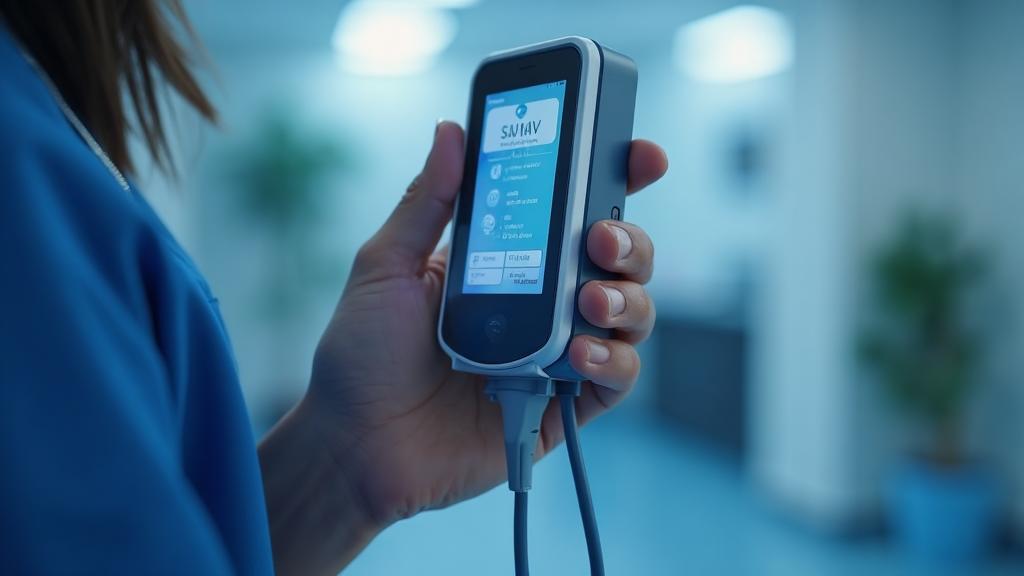
# Insulin Pumps 2024: The Complete Guide to Automated Insulin Delivery
The landscape of insulin pump technology has transformed dramatically in recent years. What was once simple mechanical delivery has evolved into sophisticated automated insulin delivery (AID) systems that adjust dosing in real-time based on continuous glucose monitor (CGM) readings. As an endocrinologist who has guided hundreds of patients through pump selection and optimization, I want to provide a comprehensive overview of the current options and help you understand how these life-changing devices work.
## Understanding Automated Insulin Delivery Systems
### The Evolution from Pumps to AID
Traditional insulin pumps delivered pre-programmed basal rates and user-initiated boluses. While superior to multiple daily injections for many patients, they still required constant user input and decision-making.
Automated insulin delivery systems represent a paradigm shift—these "hybrid closed-loop" systems use algorithms to:
- Continuously receive CGM glucose data
- Predict glucose trends 30-60 minutes ahead
- Automatically adjust basal insulin delivery
- Suspend insulin when hypoglycemia is predicted
- Increase delivery when glucose is rising
- Still require user boluses for meals (hence "hybrid")
### How AID Algorithms Work
The control algorithms powering AID systems use sophisticated mathematical models:
**Model Predictive Control (MPC)**: Used by systems like Control-IQ, MPC algorithms predict future glucose based on:
- Current glucose value
- Rate of glucose change
- Insulin on board (active insulin from previous doses)
- Historical response patterns
- Target glucose settings
**Proportional-Integral-Derivative (PID)**: Used by some systems, PID responds to:
- Current glucose deviation from target (proportional)
- Accumulated error over time (integral)
- Rate of glucose change (derivative)
**Fuzzy Logic**: Incorporates rules that mimic human decision-making with degrees of certainty rather than binary yes/no responses.
## Current FDA-Approved AID Systems
### Tandem t:slim X2 with Control-IQ
**Overview**: The most widely used AID system in the United States, Control-IQ integrates with Dexcom G6 or G7 CGM.
**Key Features**:
- Touchscreen interface with smartphone-like navigation
- Automatic basal adjustment every 5 minutes
- Predictive correction boluses (up to 60% of user-set correction dose)
- Sleep Activity setting for tighter overnight control (112.5 mg/dL target)
- Exercise Activity setting with higher target (140-160 mg/dL)
- Optional "Dexcom Share" for remote monitoring
- t:connect mobile app for data visualization
**Algorithm Behavior**:
- Target glucose: 110 mg/dL (112.5 mg/dL in Sleep mode)
- Increases basal when predicted glucose >160 mg/dL
- Delivers correction boluses when predicted glucose >180 mg/dL
- Reduces basal when predicted glucose <112.5 mg/dL
- Suspends insulin when predicted glucose <70 mg/dL
**Pros**:
- User-friendly interface
- Consistent algorithm performance
- Software updatable via computer
- Excellent data visualization tools
**Cons**:
- Tubing required
- Battery requires regular charging
- Relatively large reservoir changes
### Medtronic 780G with Guardian 4
**Overview**: Medtronic's latest system offers advanced automation with their proprietary Guardian 4 CGM.
**Key Features**:
- SmartGuard technology with auto-correction boluses
- Adjustable glucose target (100-120 mg/dL)
- Meal detection technology
- Bluetooth connectivity to smartphone app
- Companion app provides pump control capabilities
**Algorithm Behavior**:
- User-adjustable target (lower than competitors)
- Auto-correction boluses every 5 minutes as needed
- Meal detection can reduce post-meal spikes
- Aggressive hypo prevention
**Pros**:
- Lowest available glucose target (100 mg/dL)
- Integrated system (pump + CGM from same company)
- Meal detection reduces missed bolus impact
**Cons**:
- Guardian 4 CGM requires more calibrations than Dexcom
- Steeper learning curve
- Algorithm can feel aggressive to some users
### Omnipod 5 with Dexcom G6/G7
**Overview**: The first tubeless AID system, Omnipod 5 eliminates infusion set tubing by housing the pump, reservoir, and infusion site in a single pod.
**Key Features**:
- Tubeless design worn directly on body
- Controlled entirely via smartphone app or dedicated controller
- Integrates with Dexcom G6 and G7 CGM
- 72-hour pod wear time
- Activity modes for exercise
- Waterproof pods
**Algorithm Behavior**:
- Uses SmartAdjust technology with adaptive learning
- Target glucose adjustable from 110-150 mg/dL
- Algorithm learns individual insulin sensitivity patterns
- Automated basal adjustments every 5 minutes
- No automated correction boluses (manual boluses only)
**Pros**:
- Tubeless freedom
- Discreet wear under clothing
- No separate pump device to carry
- Smartphone control
- Waterproof for swimming
**Cons**:
- Pod creates visible bump under clothing
- Pod failure requires complete pod replacement
- No automated correction boluses
- Three-day pod changes can feel frequent
### Beta Bionics iLet Bionic Pancreas
**Overview**: A unique approach requiring no user-programmed basal rates or carb ratios—the iLet learns and adapts entirely on its own.
**Key Features**:
- "Set it and forget it" approach
- Only requires body weight for initialization
- No carb counting required (estimates from meal size: "Usual," "More," "Less")
- Automatic basal, correction, and meal bolus calculation
- Integrates with Dexcom G6
**Algorithm Behavior**:
- Initializes based solely on body weight
- Learns insulin requirements over 24-48 hours
- Continuously adapts to changing needs
- Doses insulin automatically without user-set parameters
**Pros**:
- Simplest setup and use
- No basal rate or carb ratio programming
- Ideal for those who struggle with self-management
- Reduced decision burden
**Cons**:
- Less user control for experienced pumpers
- Learning period may have initial glucose variability
- Meal bolusing without precise carb counts
- Newer to market with less long-term data
## Comparing Systems: What Matters Most
### Time in Range Performance
All current AID systems significantly improve Time in Range (TIR) compared to traditional pump therapy or MDI:
- **Control-IQ**: Clinical trials showed 71% TIR (70-180 mg/dL) vs 59% without AID
- **780G**: Studies demonstrate 75-80% TIR with 100 mg/dL target
- **Omnipod 5**: Clinical data shows 68-74% TIR
- **iLet**: Trials showed approximately 65% TIR
### Hypoglycemia Prevention
A primary benefit of AID systems is reduced hypoglycemia:
- Predictive suspension prevents most severe lows
- Night-time hypoglycemia dramatically reduced
- Fear of hypoglycemia decreased, improving quality of life
### User Experience Factors
Beyond glucose outcomes, consider:
**Physical Design**:
- Tubed vs tubeless preference
- Size and visibility of devices
- Charging vs battery replacement
- Reservoir size and change frequency
**Interface Preferences**:
- Touchscreen vs buttons
- Smartphone control capability
- Data visualization options
- Alert customization
**CGM Compatibility**:
- Dexcom G6/G7 vs Medtronic Guardian 4
- Calibration requirements
- Accuracy and reliability
- Insertion comfort
## Preparing for Pump Therapy
### Medical Candidacy
Ideal candidates for AID systems:
- Type 1 diabetes (primary indication)
- Type 2 diabetes requiring intensive insulin therapy
- Motivated to learn technology
- Able to perform basic troubleshooting
- Willing to wear devices continuously
- Committed to regular follow-up
### Insurance and Cost Considerations
AID systems require significant financial commitment:
- Pump devices: $6,000-$8,000+
- Monthly supplies: $300-$500+
- CGM sensors and transmitters: $300-$400+ monthly
Most insurance plans cover pump therapy with prior authorization. Medicare and Medicaid have specific coverage criteria. Work with your endocrinologist's team for insurance navigation.
### Training Requirements
Successful pump therapy requires comprehensive education:
1. Basic pump operation (4-8 hours initial training)
2. AID-specific features and expectations
3. Troubleshooting common issues
4. Site rotation and insertion technique
5. Sick day management
6. Exercise and activity adjustments
7. Data review and optimization
## Optimizing Your AID System
### Setting Expectations
AID systems dramatically improve diabetes management but don't eliminate it:
- Still require meal boluses
- Need carb counting for best results
- Require site changes and CGM sensor replacements
- Will have occasional high and low glucose values
- Technology can fail—always have backup supplies
### Common Optimization Strategies
**Bolus Timing**: Even with AID, pre-bolusing 10-15 minutes before meals improves post-meal glucose.
**Carb Accuracy**: More accurate carb counting leads to better meal coverage.
**Site Selection**: Rotate sites to maintain optimal insulin absorption.
**Extended Boluses**: Use for high-fat or high-protein meals that digest slowly.
**Activity Settings**: Proactively use exercise modes before and during activity.
### Data Review
Regular data analysis identifies patterns and optimization opportunities:
- Review time-in-range trends
- Identify recurring highs or lows by time of day
- Assess meal bolus effectiveness
- Monitor site performance
- Track sensor accuracy
## The Future of Insulin Delivery
### Emerging Technologies
The next generation of systems promises:
**Fully Closed-Loop Systems**: Automated meal detection and bolusing without user input
**Faster Insulins**: Ultra-rapid insulins improve AID response time
**Implantable Pumps**: Intraperitoneal delivery mimics natural insulin action
**Dual-Hormone Systems**: Glucagon delivery for more precise glucose control
**Smaller Devices**: Miniaturization continues to reduce device footprint
### The Goal: Reducing Diabetes Burden
Each technological advance aims to reduce the mental and physical burden of diabetes management while improving health outcomes. The ideal system would be invisible, require minimal attention, and maintain near-normal glucose levels without hypoglycemia.
## Making Your Decision
Choosing an AID system is personal. Consider:
- Your lifestyle and activity level
- Technology comfort
- Desire for simplicity vs control
- Physical preferences
- Insurance coverage
- Endocrinologist experience with specific systems
There's no "best" system—only the best system for you. Work closely with your diabetes care team to evaluate options and choose the technology that fits your life.
*At Vitella MD, we help patients navigate the complex landscape of diabetes technology. Our team has extensive experience with all major AID systems and can guide you through selection, insurance authorization, training, and ongoing optimization. Schedule a consultation to explore whether automated insulin delivery is right for you.*

About the Author
Dr. Anna Frisch, MD, PhD
Dr. Anna Frisch is a board-certified endocrinologist with over 30 years of experience specializing in thyroid disorders, diabetes management, and hormone optimization. She founded Palm Beach Thyroid & Endocrinology Wellness to provide exceptional, personalized endocrine care to patients throughout Florida.
Share:
This article is for educational purposes only and does not constitute medical advice. Please consult with your physician for personalized recommendations.
Stay Updated on Thyroid Health
Get the latest insights, research updates, and wellness tips from Dr. Anna Frisch delivered to your inbox.
Join 5,000+ subscribers. Unsubscribe anytime.