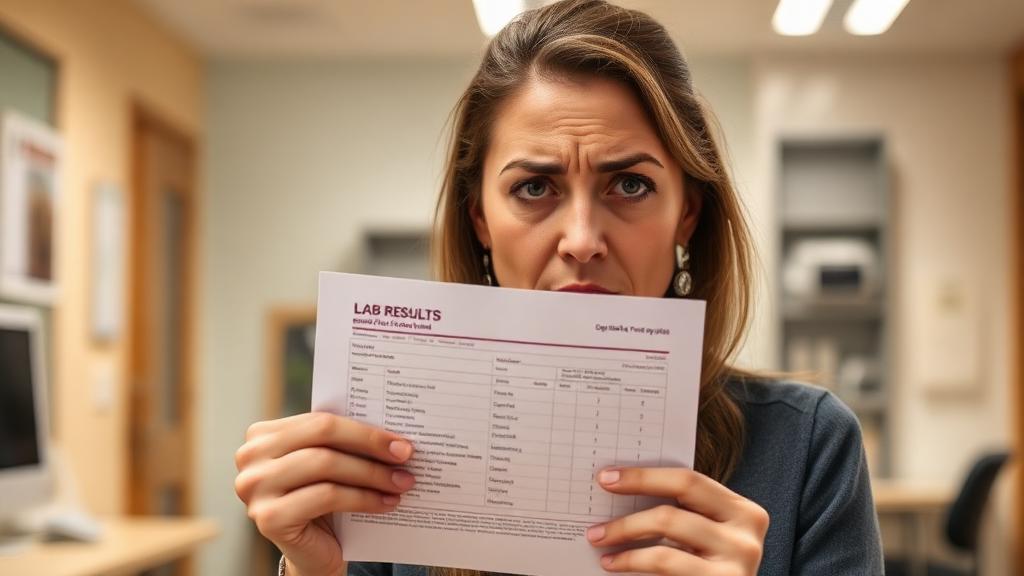
<p class="lead">Few experiences are more frustrating than being told your thyroid labs are "normal" when you're struggling with fatigue, weight gain, brain fog, and other classic hypothyroid symptoms. If this sounds familiar, you're not alone—and there may be real explanations for why you feel terrible despite reassuring lab results.</p>
<h2>The Limitations of Standard Thyroid Testing</h2>
<p>The standard approach to thyroid testing typically involves checking TSH (Thyroid Stimulating Hormone) alone—or sometimes TSH with Free T4. While TSH is a sensitive screening tool for primary thyroid dysfunction, it has significant limitations that can leave many patients underdiagnosed or inadequately treated.</p>
<h3>The Problem with "Normal" Reference Ranges</h3>
<p>Laboratory reference ranges for TSH are typically 0.4-4.5 mIU/L, derived from the statistical distribution in the general population (the middle 95% of results). However, this approach has several problems:</p>
<ul>
<li>The reference population may include people with undiagnosed thyroid disease</li>
<li>"Normal" doesn't mean "optimal"—there's a wide range of function within normal limits</li>
<li>Individual setpoints vary—your optimal TSH might differ from someone else's</li>
<li>Many thyroid specialists consider the upper limit of optimal TSH to be 2.0-2.5 mIU/L</li>
</ul>
<p>A patient with a TSH of 4.0 mIU/L is technically "normal" but may feel significantly different than when their TSH is 1.5 mIU/L.</p>
<h2>Reasons Your TSH May Be Normal But You Feel Unwell</h2>
<h3>1. Incomplete Testing</h3>
<p>TSH alone doesn't tell the complete story. A comprehensive thyroid evaluation should include:</p>
<ul>
<li><strong>Free T4</strong> - The main hormone produced by the thyroid</li>
<li><strong>Free T3</strong> - The active hormone that cells actually use</li>
<li><strong>Reverse T3</strong> - An inactive form that can block T3 action</li>
<li><strong>TPO Antibodies</strong> - Marker for Hashimoto's thyroiditis</li>
<li><strong>Thyroglobulin Antibodies</strong> - Another autoimmune marker</li>
</ul>
<p>You might have normal TSH but low-normal Free T3, elevated Reverse T3, or positive antibodies indicating early autoimmune thyroid disease.</p>
<h3>2. T4 to T3 Conversion Issues</h3>
<p>Your thyroid primarily produces T4, which must be converted to T3 in peripheral tissues (liver, kidneys, muscles). Several factors can impair this conversion:</p>
<ul>
<li><strong>Chronic stress</strong> - Elevates cortisol, which inhibits conversion</li>
<li><strong>Nutrient deficiencies</strong> - Selenium, zinc, iron, and B vitamins are required for conversion enzymes</li>
<li><strong>Inflammation</strong> - Chronic inflammatory conditions impair conversion</li>
<li><strong>Gut dysfunction</strong> - About 20% of T4 to T3 conversion occurs in the gut</li>
<li><strong>Liver disease</strong> - The liver is the primary site of T4 to T3 conversion</li>
<li><strong>Medications</strong> - Beta-blockers, amiodarone, and others can inhibit conversion</li>
<li><strong>Caloric restriction</strong> - Severe dieting slows conversion as a protective mechanism</li>
</ul>
<h3>3. Elevated Reverse T3</h3>
<p>Under certain conditions, T4 is preferentially converted to Reverse T3 (rT3) rather than active T3. Reverse T3 is metabolically inactive and can actually block T3 receptors. Causes include chronic illness, significant stress, severe caloric restriction, inflammation, and certain medications.</p>
<p>A high Reverse T3 to Free T3 ratio may explain symptoms even with normal TSH and Free T4.</p>
<h3>4. Thyroid Hormone Resistance</h3>
<p>Some individuals have reduced sensitivity to thyroid hormones at the cellular level. This can be genetic (mutations in thyroid hormone receptors) or acquired (from chronic inflammation or other factors). In these cases, "normal" hormone levels are insufficient for normal cellular function.</p>
<h3>5. Early or "Subclinical" Hashimoto's</h3>
<p>Hashimoto's thyroiditis (autoimmune thyroid disease) often develops gradually over years. In early stages, you may have elevated thyroid antibodies and thyroid inflammation, fluctuating hormone levels causing intermittent symptoms, and normal TSH on testing (which captures just one moment in time).</p>
<p>Antibody testing can identify Hashimoto's before TSH becomes abnormal, allowing for earlier intervention.</p>
<h2>Other Conditions That Mimic Thyroid Disease</h2>
<p>Sometimes symptoms attributed to thyroid dysfunction actually stem from other conditions:</p>
<h3>Iron Deficiency</h3>
<p>Iron deficiency causes fatigue, brain fog, cold intolerance, hair loss, and shortness of breath—symptoms nearly identical to hypothyroidism. Ferritin (iron storage) should ideally be 70-90 ng/mL, not just above the minimum "normal" of 12 ng/mL.</p>
<h3>Vitamin B12 Deficiency</h3>
<p>B12 deficiency causes fatigue, cognitive dysfunction, numbness/tingling, depression, and balance problems. It's particularly common in people with autoimmune thyroid disease (both involve autoimmune mechanisms). Vegetarians, older adults, and those taking metformin or acid blockers are at higher risk.</p>
<h3>Vitamin D Deficiency</h3>
<p>Low vitamin D is associated with fatigue, muscle weakness, bone pain, depression, and increased autoimmune disease risk. Optimal levels are 40-60 ng/mL, not just above the minimum of 30 ng/mL.</p>
<h3>Adrenal Dysfunction</h3>
<p>The adrenal and thyroid systems are intimately connected. HPA axis dysfunction (often from chronic stress) can cause fatigue, brain fog, sleep disturbances, and difficulty handling stress—symptoms that overlap significantly with thyroid disease.</p>
<h3>Sleep Disorders</h3>
<p>Sleep apnea and other sleep disorders cause fatigue, weight gain, cognitive dysfunction, and mood changes. Sleep apnea is underdiagnosed, particularly in women, and should be considered in anyone with unexplained fatigue.</p>
<h3>Depression</h3>
<p>Depression and thyroid disease have significant symptom overlap and bidirectional relationships—each can cause or worsen the other. Proper evaluation should address both possibilities.</p>
<h2>What You Can Do</h2>
<h3>Request Comprehensive Testing</h3>
<p>Ask for a complete thyroid panel (TSH, Free T4, Free T3, Reverse T3, TPO antibodies, thyroglobulin antibodies) plus ferritin, vitamin B12, vitamin D, complete blood count, and metabolic panel.</p>
<h3>Look at Your Results Critically</h3>
<p>Consider where your values fall within the reference range. Low-normal Free T3, high-normal TSH, borderline antibodies, and low-normal ferritin may all contribute to symptoms.</p>
<h3>Address Modifiable Factors</h3>
<p>Optimize nutrient status (especially selenium, zinc, iron, B12, vitamin D), manage chronic stress, improve sleep quality, and address gut health issues.</p>
<h3>Seek Specialist Evaluation</h3>
<p>If your primary care provider's evaluation hasn't explained your symptoms, consider seeing an endocrinologist who takes a comprehensive approach to thyroid health.</p>
<h2>When "Normal" Isn't Normal for You</h2>
<p>The goal of medical care isn't to achieve "normal" lab values—it's to help you feel well and function optimally. If you're experiencing symptoms that affect your quality of life, those symptoms deserve investigation regardless of where your labs fall within the reference range.</p>
<p>At Palm Beach Thyroid & Endocrinology Wellness, we take a comprehensive approach to thyroid evaluation, looking beyond TSH to understand the complete picture of your thyroid health. Schedule a consultation to discuss your symptoms and develop a personalized evaluation and treatment plan.</p>
<p><em>This article is for educational purposes only and does not constitute medical advice. Always consult with a qualified healthcare provider for personalized recommendations.</em></p>

About the Author
Dr. Anna Frisch, MD, PhD
Dr. Anna Frisch is a board-certified endocrinologist with over 30 years of experience specializing in thyroid disorders, diabetes management, and hormone optimization. She founded Palm Beach Thyroid & Endocrinology Wellness to provide exceptional, personalized endocrine care to patients throughout Florida.
Share:
This article is for educational purposes only and does not constitute medical advice. Please consult with your physician for personalized recommendations.
Stay Updated on Thyroid Health
Get the latest insights, research updates, and wellness tips from Dr. Anna Frisch delivered to your inbox.
Join 5,000+ subscribers. Unsubscribe anytime.