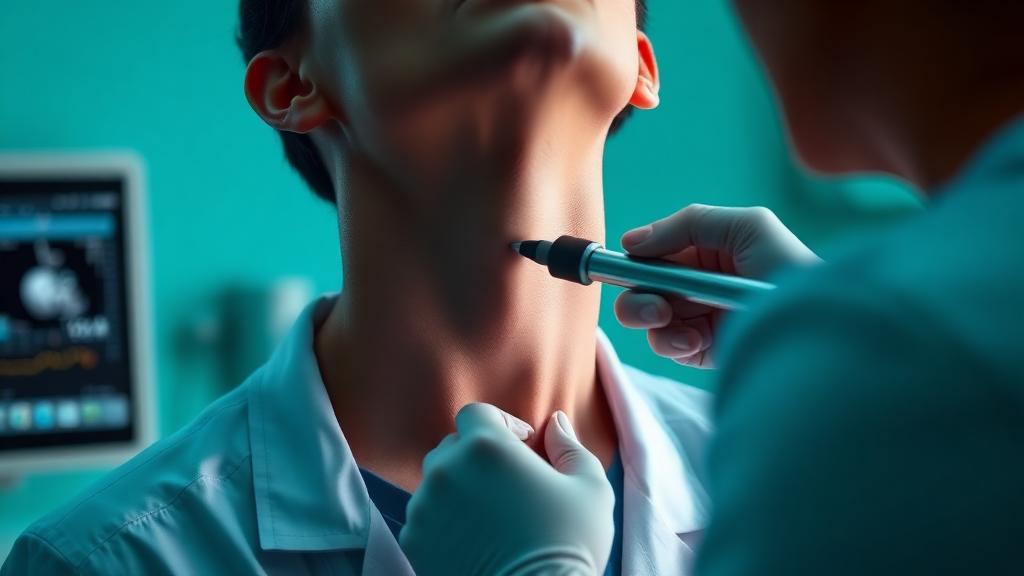
<p class="lead">Discovering a thyroid nodule can be anxiety-provoking, but understanding the facts can help put things in perspective. Thyroid nodules are remarkably common—and the vast majority are completely benign. Learning when nodules require attention and when they can be safely monitored empowers patients to make informed decisions about their care.</p>
<h2>How Common Are Thyroid Nodules?</h2>
<p>Thyroid nodules are among the most frequently encountered endocrine findings. Studies show that palpable nodules (those that can be felt on examination) occur in 4-7% of the general population. However, when high-resolution ultrasound is used, nodules are detected in 20-76% of adults, with higher rates in older individuals and women.</p>
<p>This dramatic difference between palpable and ultrasound-detected nodules illustrates an important point: most nodules are small, cause no symptoms, and would never be discovered without imaging performed for other reasons. The increasing use of CT scans, MRIs, and carotid ultrasounds has led to many more "incidental" thyroid nodule discoveries.</p>
<h2>What Causes Thyroid Nodules?</h2>
<p>Thyroid nodules can develop for various reasons:</p>
<h3>Benign Causes (90-95% of nodules)</h3>
<p><strong>Colloid nodules:</strong> The most common type, these represent overgrown normal thyroid tissue. They're filled with colloid, the protein-rich fluid that stores thyroid hormone.</p>
<p><strong>Thyroid cysts:</strong> Fluid-filled cavities within the thyroid, often arising from degenerating adenomas. Pure cysts are almost always benign.</p>
<p><strong>Follicular adenomas:</strong> Benign tumors of thyroid cells that are encapsulated (contained within a fibrous shell).</p>
<p><strong>Inflammatory nodules:</strong> May develop in association with Hashimoto's thyroiditis or other inflammatory conditions.</p>
<h3>Malignant Causes (5-10% of nodules)</h3>
<p><strong>Papillary thyroid cancer:</strong> The most common thyroid malignancy (80-85% of thyroid cancers), with excellent prognosis.</p>
<p><strong>Follicular thyroid cancer:</strong> Accounts for 10-15% of thyroid cancers; also generally has good outcomes.</p>
<p><strong>Medullary thyroid cancer:</strong> Arises from C-cells (which produce calcitonin); represents 3-5% of thyroid cancers.</p>
<p><strong>Anaplastic thyroid cancer:</strong> Rare but aggressive; accounts for 1-2% of thyroid cancers.</p>
<h2>Risk Factors for Thyroid Cancer</h2>
<p>Certain factors increase the likelihood that a nodule may be malignant:</p>
<ul>
<li><strong>Radiation exposure</strong> - History of radiation to the head, neck, or chest, especially in childhood</li>
<li><strong>Family history</strong> - First-degree relative with thyroid cancer</li>
<li><strong>Age extremes</strong> - Nodules in patients under 20 or over 70 carry higher risk</li>
<li><strong>Male sex</strong> - While nodules are more common in women, nodules in men are more likely to be malignant</li>
<li><strong>Rapid growth</strong> - A nodule that grows quickly warrants prompt evaluation</li>
<li><strong>Associated symptoms</strong> - Hoarseness, difficulty swallowing, enlarged lymph nodes</li>
<li><strong>Genetic syndromes</strong> - Multiple endocrine neoplasia (MEN) syndromes, Cowden syndrome, familial adenomatous polyposis</li>
</ul>
<h2>How Thyroid Nodules Are Evaluated</h2>
<h3>Physical Examination</h3>
<p>Your physician will examine your neck, feeling for nodules, their size, consistency, and mobility. They'll also check for enlarged lymph nodes and assess your voice quality.</p>
<h3>Blood Tests</h3>
<p>TSH (Thyroid Stimulating Hormone) is the initial blood test. If TSH is low (suggesting hyperthyroidism), the nodule may be "hot" (overproducing thyroid hormone), which is almost always benign. Additional tests may include Free T4, Free T3, thyroid antibodies, and calcitonin (if medullary cancer is suspected).</p>
<h3>Thyroid Ultrasound</h3>
<p>High-resolution ultrasound is the cornerstone of nodule evaluation. It provides detailed information about nodule size and number, internal composition (solid, cystic, or mixed), echogenicity (brightness compared to surrounding tissue), margins (smooth or irregular), calcifications (type and pattern), blood flow patterns, and lymph node appearance.</p>
<p>Certain ultrasound features are associated with higher cancer risk, including hypoechogenicity (darker than surrounding tissue), irregular or lobulated margins, microcalcifications, taller-than-wide shape, and extrathyroidal extension.</p>
<h3>The TI-RADS Classification System</h3>
<p>The American College of Radiology's Thyroid Imaging Reporting and Data System (TI-RADS) provides a standardized way to classify nodules based on ultrasound features:</p>
<ul>
<li><strong>TR1 (Benign)</strong> - No FNA needed</li>
<li><strong>TR2 (Not Suspicious)</strong> - No FNA needed</li>
<li><strong>TR3 (Mildly Suspicious)</strong> - FNA if ≥2.5 cm, follow if ≥1.5 cm</li>
<li><strong>TR4 (Moderately Suspicious)</strong> - FNA if ≥1.5 cm, follow if ≥1 cm</li>
<li><strong>TR5 (Highly Suspicious)</strong> - FNA if ≥1 cm, follow if ≥0.5 cm</li>
</ul>
<h3>Fine-Needle Aspiration (FNA) Biopsy</h3>
<p>FNA is a minimally invasive procedure where a thin needle extracts cells from the nodule for microscopic examination. It's performed in the office using ultrasound guidance, takes about 15-30 minutes, and requires no sedation. Most patients describe it as less painful than having blood drawn.</p>
<h3>Bethesda Classification of FNA Results</h3>
<p>FNA results are categorized using the Bethesda System:</p>
<ul>
<li><strong>I - Nondiagnostic</strong> - Insufficient cells; repeat FNA recommended (5-10% cancer risk)</li>
<li><strong>II - Benign</strong> - Consistent with benign nodule (0-3% cancer risk)</li>
<li><strong>III - Atypia/Follicular Lesion of Undetermined Significance</strong> - Some abnormal cells (10-30% cancer risk)</li>
<li><strong>IV - Follicular Neoplasm</strong> - Cannot distinguish benign from malignant (25-40% cancer risk)</li>
<li><strong>V - Suspicious for Malignancy</strong> - Highly concerning features (50-75% cancer risk)</li>
<li><strong>VI - Malignant</strong> - Definitive cancer diagnosis (97-99% cancer risk)</li>
</ul>
<h2>When Nodules Can Be Safely Monitored</h2>
<p>Many nodules don't require treatment and can be followed with periodic ultrasound:</p>
<ul>
<li>Small nodules (<1 cm) without suspicious features</li>
<li>Nodules with benign FNA results</li>
<li>Pure cysts</li>
<li>Spongiform nodules (honeycomb appearance)</li>
</ul>
<p>Monitoring typically involves repeat ultrasound at 12-24 months initially, then at longer intervals if the nodule remains stable.</p>
<h2>When Treatment Is Needed</h2>
<p>Treatment may be recommended for nodules causing compressive symptoms (difficulty swallowing or breathing), hyperfunctioning nodules causing hyperthyroidism, nodules with malignant or suspicious biopsy results, or cosmetic concerns for large, visible nodules.</p>
<p>Treatment options include surgery (lobectomy or total thyroidectomy), radioactive iodine for hyperfunctioning nodules, or newer techniques like radiofrequency ablation for select benign nodules.</p>
<h2>The Reassuring Reality</h2>
<p>If you've been told you have a thyroid nodule, remember: the overwhelming majority are benign and require only monitoring. Even thyroid cancers, when they do occur, are usually slow-growing with excellent survival rates. Modern diagnostic tools allow us to accurately identify which nodules need treatment and which can be safely observed.</p>
<p>At Palm Beach Thyroid & Endocrinology Wellness, we provide expert thyroid nodule evaluation using the latest ultrasound technology and evidence-based guidelines. Schedule a consultation to discuss your thyroid nodule and develop an appropriate management plan.</p>
<p><em>This article is for educational purposes only and does not constitute medical advice. Always consult with a qualified healthcare provider for personalized recommendations.</em></p>
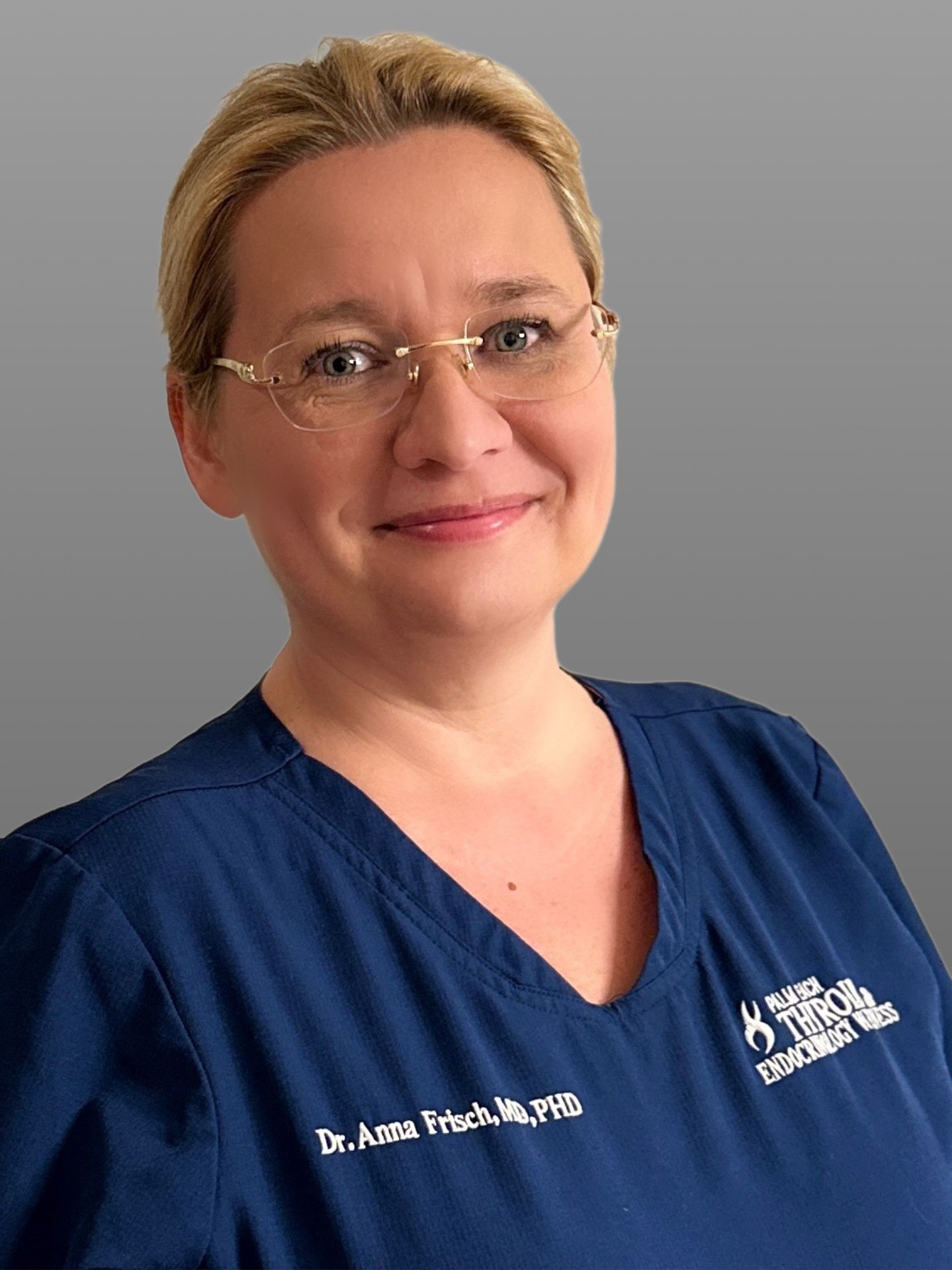
About the Author
Dr. Anna Frisch, MD, PhD
Dr. Anna Frisch is a board-certified endocrinologist with over 30 years of experience specializing in thyroid disorders, diabetes management, and hormone optimization. She founded Palm Beach Thyroid & Endocrinology Wellness to provide exceptional, personalized endocrine care to patients throughout Florida.
Share:
This article is for educational purposes only and does not constitute medical advice. Please consult with your physician for personalized recommendations.
Stay Updated on Thyroid Health
Get the latest insights, research updates, and wellness tips from Dr. Anna Frisch delivered to your inbox.
Join 5,000+ subscribers. Unsubscribe anytime.