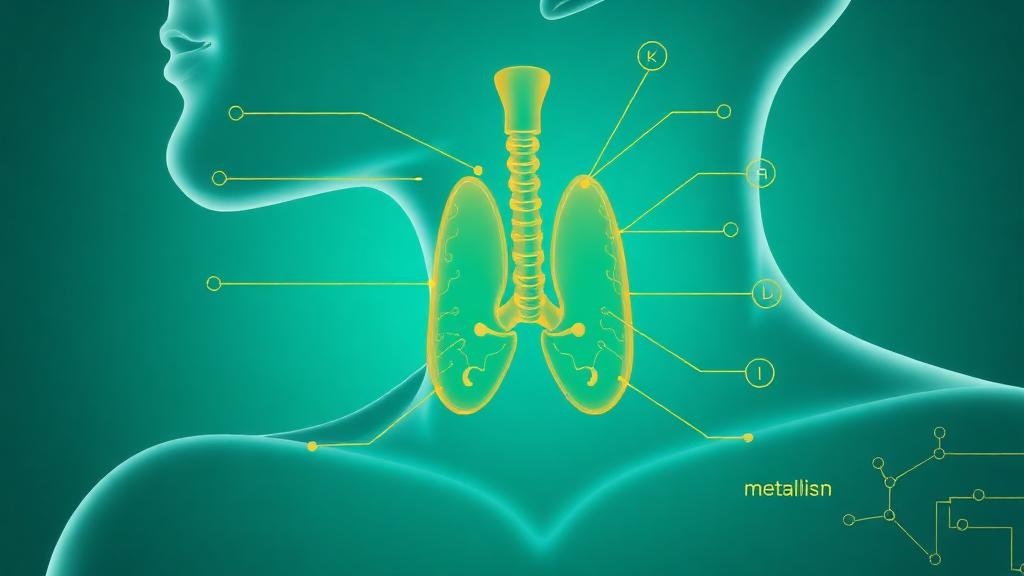
Understanding Your Thyroid: The Master Gland of Metabolism
Learn how your thyroid gland controls metabolism, energy, and wellness. Dr. Anna Frisch explains the fundamentals of thyroid health.
Dr. Anna Frisch
MD, PhD · Board Certified Endocrinologist
<p class="lead">The thyroid gland, a small butterfly-shaped organ located at the base of your neck, wields extraordinary influence over your entire body. Despite weighing only about 20 grams, this master gland of metabolism produces hormones that affect virtually every cell, tissue, and organ system, making thyroid health fundamental to overall wellness.</p>
<h2>Anatomy and Location of the Thyroid</h2>
<p>The thyroid gland sits in the anterior (front) portion of the neck, just below the Adam's apple (larynx) and wraps around the trachea (windpipe). Its distinctive butterfly shape consists of two lobes connected by a narrow band of tissue called the isthmus. Each lobe is approximately 4-6 centimeters in length, and the entire gland typically cannot be seen or easily felt in healthy individuals.</p>
<p>Positioned near the thyroid are four small parathyroid glands, which regulate calcium levels, and the recurrent laryngeal nerves, which control the vocal cords. This proximity is particularly important in thyroid surgery, where preserving these structures is essential.</p>
<h2>How the Thyroid Produces Hormones</h2>
<p>The thyroid gland produces two primary hormones: thyroxine (T4) and triiodothyronine (T3). T4 is considered the "storage" hormone, produced in larger quantities but relatively inactive. T3 is the "active" hormone that cells actually use to regulate metabolism. About 80% of circulating T3 is converted from T4 in peripheral tissues, primarily the liver and kidneys.</p>
<p>Thyroid hormone production requires iodine, an essential mineral obtained from diet. The thyroid actively concentrates iodine from the bloodstream, it contains approximately 70-80% of the body's total iodine stores. This iodine is incorporated into thyroglobulin, a large protein that serves as the precursor for T4 and T3 production.</p>
<h3>The Hypothalamic-Pituitary-Thyroid Axis</h3>
<p>Thyroid function is controlled through a sophisticated feedback loop involving three key organs:</p>
<p><strong>The Hypothalamus:</strong> This region of the brain monitors blood levels of thyroid hormones and releases Thyrotropin-Releasing Hormone (TRH) when levels are low.</p>
<p><strong>The Pituitary Gland:</strong> Located at the base of the brain, the pituitary responds to TRH by releasing Thyroid-Stimulating Hormone (TSH). TSH is the primary signal that tells the thyroid to produce and release hormones.</p>
<p><strong>The Thyroid Gland:</strong> In response to TSH, the thyroid produces and releases T4 and T3. When hormone levels rise sufficiently, they provide negative feedback to the hypothalamus and pituitary, reducing TRH and TSH production.</p>
<p>This elegant feedback system maintains thyroid hormone levels within a narrow, optimal range. Disruption at any level, hypothalamus, pituitary, or thyroid, can lead to dysfunction.</p>
<h2>The Wide-Ranging Effects of Thyroid Hormones</h2>
<p>Thyroid hormones influence virtually every organ system in the body:</p>
<h3>Metabolic Function</h3>
<p>Thyroid hormones regulate the basal metabolic rate (BMR), the amount of energy your body uses at rest. They increase oxygen consumption and heat production in tissues, influence how the body processes carbohydrates, fats, and proteins, and affect cholesterol metabolism. This is why thyroid dysfunction often manifests as changes in weight, temperature sensitivity, and energy levels.</p>
<h3>Cardiovascular System</h3>
<p>The heart is particularly sensitive to thyroid hormones. They affect heart rate, cardiac output, blood pressure, and vascular resistance. Hypothyroidism can lead to bradycardia (slow heart rate), elevated cholesterol, and increased cardiovascular risk, while hyperthyroidism can cause tachycardia, palpitations, and in severe cases, atrial fibrillation.</p>
<h3>Nervous System</h3>
<p>Thyroid hormones are essential for normal brain development in fetuses and children. In adults, they influence mood, cognitive function, and nerve reflexes. Thyroid dysfunction commonly causes depression, anxiety, cognitive changes ("brain fog"), and peripheral neuropathy.</p>
<h3>Musculoskeletal System</h3>
<p>Thyroid hormones affect muscle strength, bone turnover, and growth. Hypothyroidism can cause muscle weakness, pain, and stiffness, while prolonged hyperthyroidism accelerates bone loss, increasing osteoporosis risk.</p>
<h3>Reproductive System</h3>
<p>In women, thyroid dysfunction can cause menstrual irregularities, fertility problems, and pregnancy complications. Both hypothyroidism and hyperthyroidism increase miscarriage risk. In men, thyroid disorders can affect libido and testosterone levels.</p>
<h3>Gastrointestinal System</h3>
<p>Thyroid hormones influence gut motility. Hypothyroidism often causes constipation due to slowed intestinal movement, while hyperthyroidism can cause diarrhea or frequent bowel movements.</p>
<h2>Common Thyroid Disorders</h2>
<h3>Hypothyroidism (Underactive Thyroid)</h3>
<p>When the thyroid doesn't produce enough hormones, metabolism slows throughout the body. The most common cause is Hashimoto's thyroiditis, an autoimmune condition where the immune system attacks the thyroid. Symptoms include fatigue, weight gain, cold intolerance, constipation, dry skin, hair loss, depression, and cognitive difficulties.</p>
<h3>Hyperthyroidism (Overactive Thyroid)</h3>
<p>Excess thyroid hormone production accelerates metabolism. Graves' disease, another autoimmune condition, is the most common cause. Symptoms include weight loss despite increased appetite, rapid heartbeat, anxiety, tremor, heat intolerance, increased sweating, and diarrhea.</p>
<h3>Thyroid Nodules</h3>
<p>Nodules are abnormal growths within the thyroid gland. They're extremely common, detectable by ultrasound in up to 70% of adults, and the vast majority are benign. However, approximately 5-15% may be malignant, requiring careful evaluation with ultrasound and sometimes fine-needle aspiration biopsy.</p>
<h3>Thyroiditis</h3>
<p>Inflammation of the thyroid can occur from autoimmune conditions (Hashimoto's), viral infections, postpartum changes, or other causes. Thyroiditis can cause temporary hyperthyroidism followed by hypothyroidism, or progress directly to permanent hypothyroidism.</p>
<h2>Evaluating Thyroid Function</h2>
<p>Comprehensive thyroid evaluation goes beyond simple TSH testing:</p>
<ul>
<li><strong>TSH</strong> - The most sensitive marker for thyroid dysfunction, but not sufficient alone</li>
<li><strong>Free T4</strong> - Measures the unbound, active form of thyroxine</li>
<li><strong>Free T3</strong> - Measures the active hormone; important for patients with conversion issues</li>
<li><strong>Reverse T3</strong> - An inactive form that can increase during stress or illness</li>
<li><strong>Thyroid antibodies</strong> - TPO and thyroglobulin antibodies indicate autoimmune thyroid disease</li>
<li><strong>Thyroid ultrasound</strong> - Evaluates thyroid structure, size, and nodules</li>
</ul>
<h2>Supporting Thyroid Health Naturally</h2>
<p>While medication is necessary for diagnosed thyroid conditions, certain lifestyle factors support optimal thyroid function:</p>
<p><strong>Adequate iodine:</strong> Most people in developed countries get sufficient iodine from iodized salt and seafood. Excessive iodine can actually worsen autoimmune thyroid conditions.</p>
<p><strong>Selenium:</strong> This mineral is essential for T4 to T3 conversion. Brazil nuts, seafood, and eggs are good sources.</p>
<p><strong>Zinc:</strong> Important for thyroid hormone synthesis and metabolism. Found in meat, shellfish, legumes, and nuts.</p>
<p><strong>Vitamin D:</strong> Deficiency is associated with increased autoimmune thyroid disease risk.</p>
<p><strong>Stress management:</strong> Chronic stress can impair T4 to T3 conversion and worsen autoimmune conditions.</p>
<h2>When to See an Endocrinologist</h2>
<p>Consider specialist consultation if you have persistent symptoms despite treatment, difficulty achieving stable thyroid levels, thyroid nodules requiring evaluation, pregnancy with thyroid disease, or a family history of thyroid disorders. At Palm Beach Thyroid & Endocrinology Wellness, we provide comprehensive thyroid evaluation and individualized treatment plans.</p>
<p><em>This article is for educational purposes only and does not constitute medical advice. Always consult with a qualified healthcare provider for personalized recommendations.</em></p>
About the Author
Dr. Anna Frisch, MD, PhD
Dr. Anna Frisch is a board-certified endocrinologist with over 30 years of experience specializing in thyroid disorders, diabetes management, and hormone optimization. She founded Palm Beach Thyroid & Endocrinology Wellness to provide exceptional, personalized endocrine care to patients throughout Florida. She is one of the few board-certified endocrinologists in the US leading a cosmetic medicine practice.
This article is for educational purposes only and does not constitute medical advice. Please consult with your physician for personalized recommendations.
Stay Updated on Thyroid Health
Get the latest insights, research updates, and wellness tips from Dr. Anna Frisch delivered to your inbox.