If your primary care physician has mentioned a referral to an endocrinologist — or if you have been searching for answers to fatigue, weight changes, or stubborn lab results — this guide will help you understand exactly what an endocrinologist does, when to see one, and what to expect at your first visit.
What is an endocrinologist?
An endocrinologist is a board-certified physician who specializes in diagnosing and treating diseases of the endocrine system — the network of glands that produce the hormones controlling almost every function in your body. After medical school, endocrinologists complete a 3-year residency in internal medicine and an additional 2–3 year fellowship in endocrinology, diabetes, and metabolism.
In simple terms: if your symptoms involve hormones, metabolism, or one of the body's glands, an endocrinologist is the specialist trained to find the cause and design a long-term treatment plan.
What does an endocrinologist do?
Endocrinologists evaluate hormone levels, interpret advanced lab work and imaging, and manage conditions that often cannot be fully resolved in a 15-minute primary care visit. A typical practice includes:
- Ordering and interpreting comprehensive hormone panels
- Performing in-office thyroid ultrasounds and fine-needle biopsies
- Managing complex diabetes, including insulin pumps and continuous glucose monitors
- Treating thyroid nodules, Hashimoto's, Graves' disease, and thyroid cancer
- Optimizing hormone replacement for menopause, andropause, and adrenal disorders
- Diagnosing pituitary, parathyroid, and adrenal tumors
- Building long-term plans for osteoporosis, metabolic syndrome, and PCOS
Which organs and glands does an endocrinologist treat?
The endocrine system is larger than most patients realize. An endocrinologist cares for conditions involving the:
- Thyroid gland — energy, metabolism, temperature regulation
- Parathyroid glands — calcium and bone health
- Adrenal glands — stress response, cortisol, blood pressure
- Pituitary gland — the "master" gland that controls other hormones
- Pancreas — insulin and blood sugar regulation
- Ovaries and testes — reproductive and sex hormones
- Hypothalamus — appetite, sleep, and hormonal signaling
When should you see an endocrinologist?
Most patients are referred when symptoms persist despite normal "basic" lab work, or when a result falls outside the standard range. Common reasons to seek an endocrinology consultation include:
- Persistent fatigue, brain fog, hair loss, or unexplained weight change
- Abnormal TSH, T3, T4, or thyroid antibody results
- A palpable lump or nodule in the neck
- Type 1 or type 2 diabetes that is difficult to control
- Symptoms of perimenopause, menopause, or low testosterone
- Irregular menstrual cycles, infertility, or suspected PCOS
- Osteoporosis, fractures, or abnormal calcium or vitamin D levels
- High blood pressure that does not respond to standard treatment
- An adrenal or pituitary mass found on imaging
If you are experiencing thyroid-specific symptoms, our dedicated thyroid care program outlines the full evaluation and treatment pathway, including in-office ultrasound and biopsy.
Hormone symptoms to watch for
Hormonal disorders can be subtle. Many patients live for years assuming their symptoms are simply "getting older" or "stress." Consider an endocrinology evaluation if you notice:
- Cold intolerance, dry skin, constipation, or thinning hair (possible hypothyroidism)
- Racing heart, tremor, heat intolerance, or unintended weight loss (possible hyperthyroidism)
- Increased thirst, frequent urination, blurred vision (possible diabetes)
- Hot flashes, night sweats, sleep disruption, low libido
- Muscle weakness, mood changes, or unexplained bruising
What to expect at your first endocrinology consultation
Your first visit at Palm Beach Thyroid & Endocrinology Wellness is designed to be thorough and unhurried. Plan for 45–60 minutes, and bring all prior lab work, imaging reports, and a complete list of medications and supplements.
- Comprehensive history. We review your symptoms, family history, lifestyle, and any prior endocrine workup.
- Targeted physical exam. This often includes a neck and thyroid exam.
- In-office testing when indicated. Many patients receive a same-visit thyroid ultrasound or have labs drawn before leaving.
- Personalized plan. Dr. Frisch reviews findings with you and outlines next steps — additional testing, medication adjustments, nutrition guidance, or a follow-up procedure.
- Ongoing partnership. Endocrine care is rarely a one-visit fix. Most patients return every 3–6 months while we fine-tune treatment.
How Palm Beach Thyroid & Endocrinology Wellness can help
Led by board-certified endocrinologist Dr. Anna Frisch, MD, PhD, our Wellington-based practice serves patients throughout Florida — in person and via telemedicine. We combine traditional endocrinology with a wellness-first philosophy that includes our in-house line of VitellaMD® clinical nutraceuticals and integrative resources through our patient resource library.
Ready to take the next step? Request an appointment or download our free Thyroid Health Blueprint to begin understanding your symptoms today.
Frequently asked questions
Do I need a referral to see an endocrinologist?
Most commercial insurance plans do not require a referral, but some HMOs and Medicare Advantage plans do. We recommend checking with your insurance carrier before scheduling.
What is the difference between an endocrinologist and a primary care doctor?
Primary care physicians manage general health and screen for hormonal issues, while endocrinologists provide subspecialty care for complex or persistent hormone disorders, including procedures like thyroid ultrasound and biopsy.
How long until I feel better?
It depends on the condition. Thyroid medication adjustments often take 6–8 weeks to show full effect, while diabetes and hormone-balance plans are usually fine-tuned over several months.
This article is for educational purposes only and does not constitute medical advice. Please consult a qualified physician for personalized recommendations.
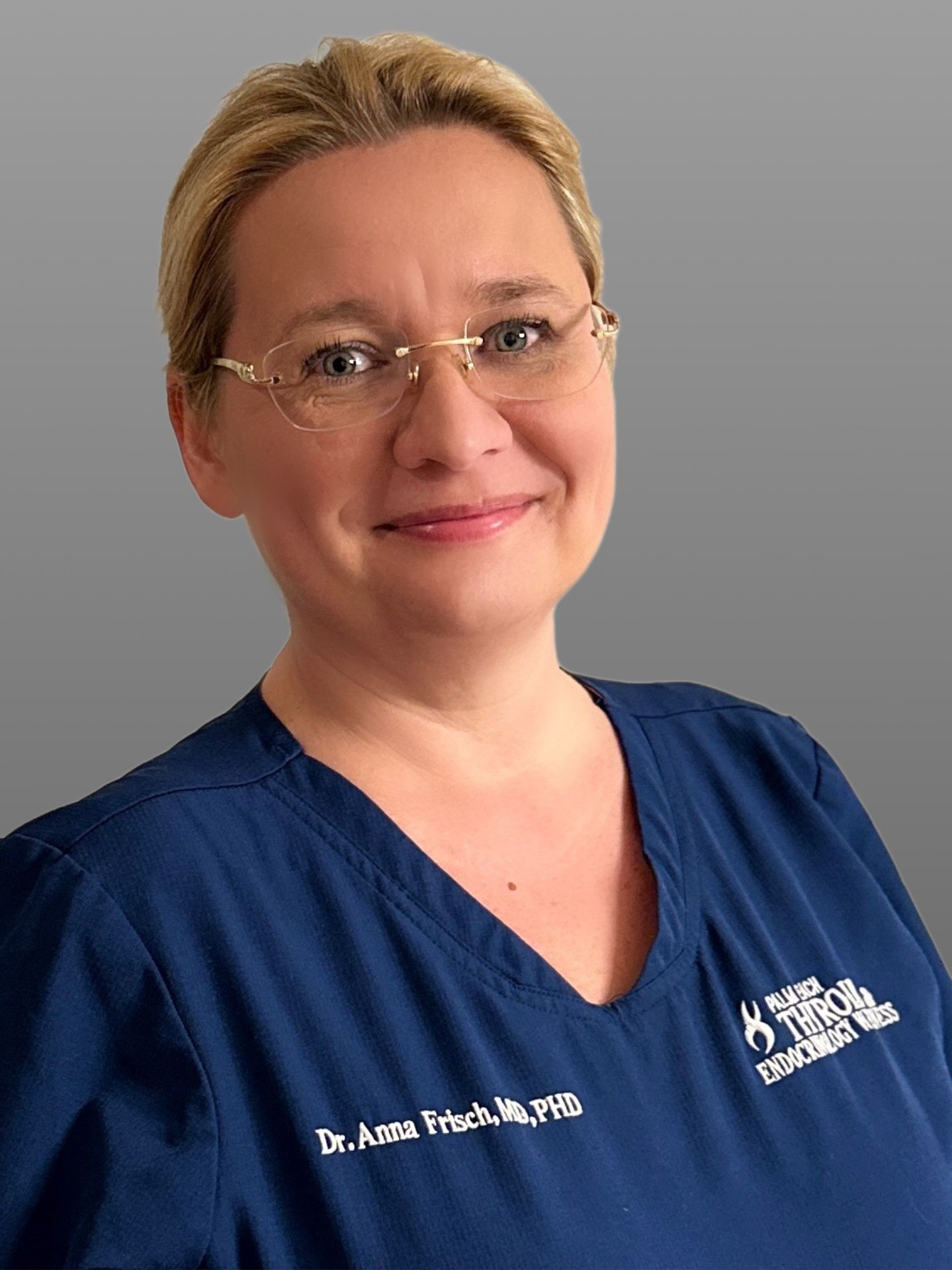
About the Author
Dr. Anna Frisch, MD, PhD
Dr. Anna Frisch is a board-certified endocrinologist with over 30 years of experience specializing in thyroid disorders, diabetes management, and hormone optimization. She founded Palm Beach Thyroid & Endocrinology Wellness to provide exceptional, personalized endocrine care to patients throughout Florida.
This article is for educational purposes only and does not constitute medical advice. Please consult with your physician for personalized recommendations.
Stay Updated on Thyroid Health
Get the latest insights, research updates, and wellness tips from Dr. Anna Frisch delivered to your inbox.
Join 5,000+ subscribers. Unsubscribe anytime.